
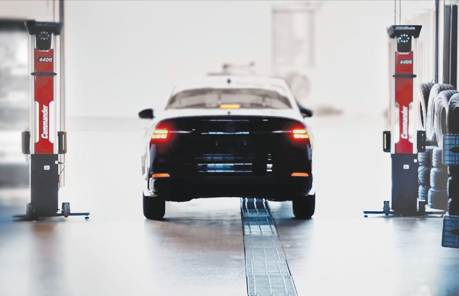
Every vehicle rolling through your shop tells a story through its wheels. Reading that story accurately and correcting alignment issues with precision determines whether customers return satisfied or experience premature tire wear and poor handling. Your choice of alignment tools directly impacts your ability to deliver consistent precision.
What Wheel Alignment Fixes (and Why It Matters)
Wheel alignment adjusts four critical angles: camber (wheel tilt), caster (steering pivot angle), toe (wheel direction), and thrust angle (axle relationship). When these match manufacturer specifications, drivers enjoy improved fuel economy, enhanced safety, and extended tire life. Miss the mark, and customers face rapid tire wear, vehicle pulling, and compromised handling. Your alignment precision directly drives customer outcomes.
Traditional Methods: How They Work & Where They Fit
Traditional alignment uses manual measurements with strings, mechanical gauges, or laser bars. Technicians measure angles using bubble gauges, turn plates, and caster-camber gauges, focusing on either two wheels or all four.
- Advantages: Low upfront investment, full manual control, reliable on older vehicles with simpler suspensions.
- Limitations: Accuracy depends entirely on technician skill. Setup times run longer, reducing bay productivity. Different technicians produce different results on identical vehicles. Manual documentation reduces transparency with customers.
Computerized Systems: CCD & 3D Imaging
- CCD systems attach sensor heads to each wheel, communicating with a central computer that compares positions to OEM specifications, guides corrections, and verifies results automatically.
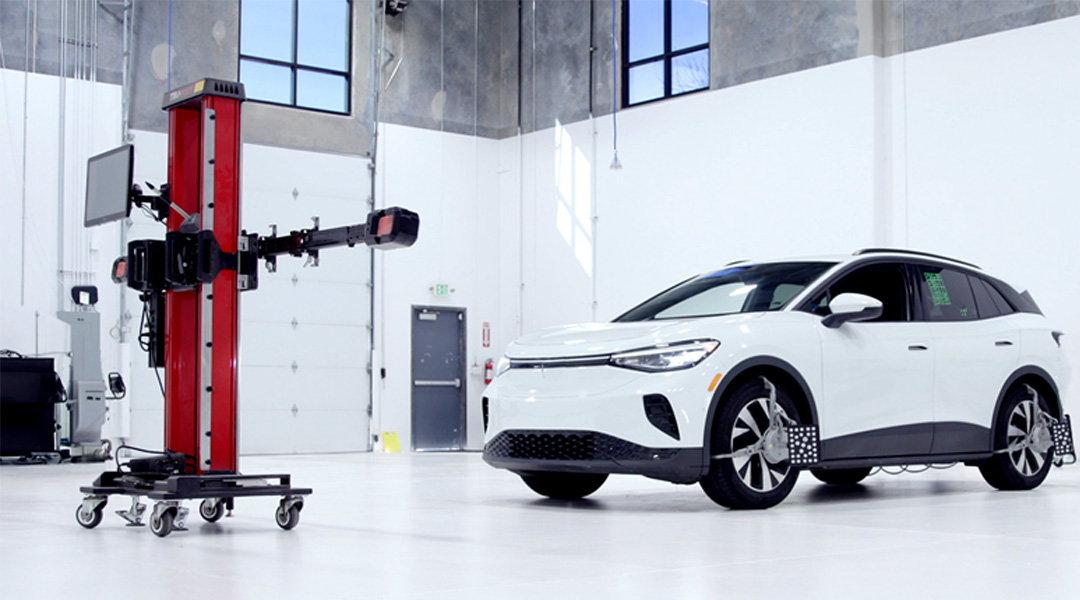
- 3D imaging systems use camera arrays tracking wheel-mounted targets to compute angles in real-time. These capture comprehensive vehicle geometry instantly, reducing setup time and eliminating human error.
Both technologies feature complete OEM databases, customer history tracking, step-by-step adjustment screens, and professional reports that demonstrate value and reduce disputes.
Accuracy & Repeatability
Traditional methods introduce variability, even skilled technicians create minor errors that compound throughout measurement. A misplaced string or unlevel gauge causes cascading inaccuracies.
3D systems deliver precision around ±0.1°, maintaining consistency regardless of operator experience. Automated sensing eliminates human variables. Repeat alignments produce virtually identical results, building confidence in your capabilities.
Speed, Workflow & Throughput
Computerized systems enable quick checks in minutes, not hours. Perform rapid inspections on the lift or shop floor to identify which vehicles need adjustments.
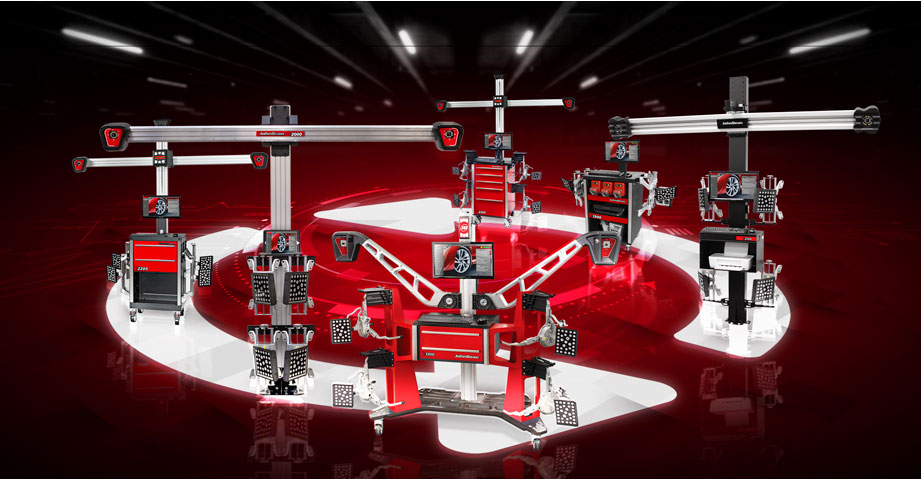
The John Bean V3300 combines ultra-fast cameras with error notifications that catch problems early, reducing rework and total alignment time. This allows more vehicles per day without sacrificing quality.
Space, Layout & Calibration
3D systems need clear camera-to-target sightlines but modern designs minimize space requirements. CCD systems offer greater flexibility in tight spaces. All computerized systems require periodic calibration, build this into your SOPs to maintain peak accuracy.
Technician Skill, Training & Trust
Computerized systems reduce required manual skills through on-screen guidance, shortening training time and improving team consistency. Visual displays and comprehensive reports transform customer interactions, show them exactly what’s wrong and how you fixed it, building trust and increasing service acceptance.
Economics & ROI
Higher upfront investment pays dividends through faster cycle times (more alignments daily), fewer comebacks (protecting reputation), and auditable results (preventing disputes). John Bean systems exemplify these ROI drivers through faster cameras, error prevention, and optimized workflows that translate directly to increased throughput and satisfaction.
When Traditional Still Makes Sense
Traditional methods work for budget-constrained startups, vintage vehicle specialists where original specs matter more than absolute precision, or shops performing only occasional alignments. Understanding these trade-offs helps inform decisions while acknowledging limitations in speed and repeatability.
Decision Framework: Traditional vs. CCD vs. 3D (With Examples)
- Maximum flexibility: CCD systems provide excellent results with adaptable bay requirements.
- Ultimate automation: 3D imaging delivers unmatched precision for high-volume environments.
- Tight spaces: The John Bean V2100 features rotating camera beam and tablet control with optional mobility kit.
- Maximum throughput: The John Bean V3300 combines advanced notifications, auto-tracking, audit mode, and ADAS information access for shops prioritizing efficiency.
Modern Vehicle Realities (Why “Computerized” Wins Long-Term)
Today’s vehicles demand integrated approaches. Computerized systems provide OEM procedures, TSBs, recalls, TPMS, and ADAS calibration steps within the alignment workflow, minimizing tool-switching and mistakes.
John Bean D2 Max™ technology maps real-world drive direction for improved precision, crucial as suspensions and ADAS systems grow complex. These advancements make computerized systems investments in your future.
Conclusion
The shift to computerized alignment represents a transformation in service capability and business potential. Modern vehicles and customer expectations demand the precision, speed, and professionalism only computerized systems deliver.
Explore John Bean wheel alignment machines to find your shop’s perfect solution. Whether entering professional alignment services or upgrading for growing demand, John Bean offers systems that deliver the accuracy customers deserve.
FAQs
How do computerized systems measure angles differently? Computerized systems use optical sensors or cameras capturing 3D wheel positions, calculating angles mathematically. Traditional tools rely on physical measurements with bubble levels and gauges, introducing human error.
Why do computerized aligners need calibration? Environmental factors and normal wear affect precision equipment. Calibration every 6-12 months or after relocation ensures specification-perfect results.
What space do 3D systems require? 3D systems need 12-14 feet bay length with clear camera-to-target sightlines. Modern systems like the V2180 minimize requirements through innovative design.
Which system fits my shop? Entry-level: V2200 balances capability with space efficiency. High-throughput/ADAS: V3300 combines speed, precision, and comprehensive integration.
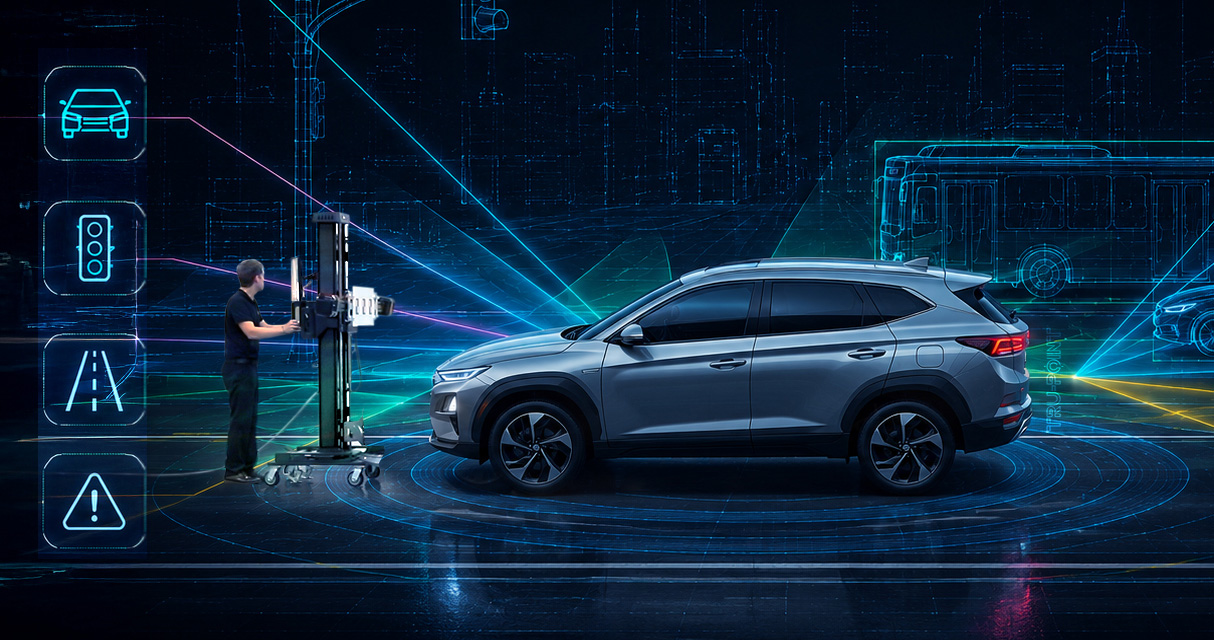 EV Wheel Service: What’s Different and How to Prepare Your Bay
  Vehicle Stopping Distance: Why Technology Reacts Faster Than You Do and Why Calibration Keeps It That Way
  Hyundai Recall 302: FCA Software Update for Tucson and Santa Cruz
 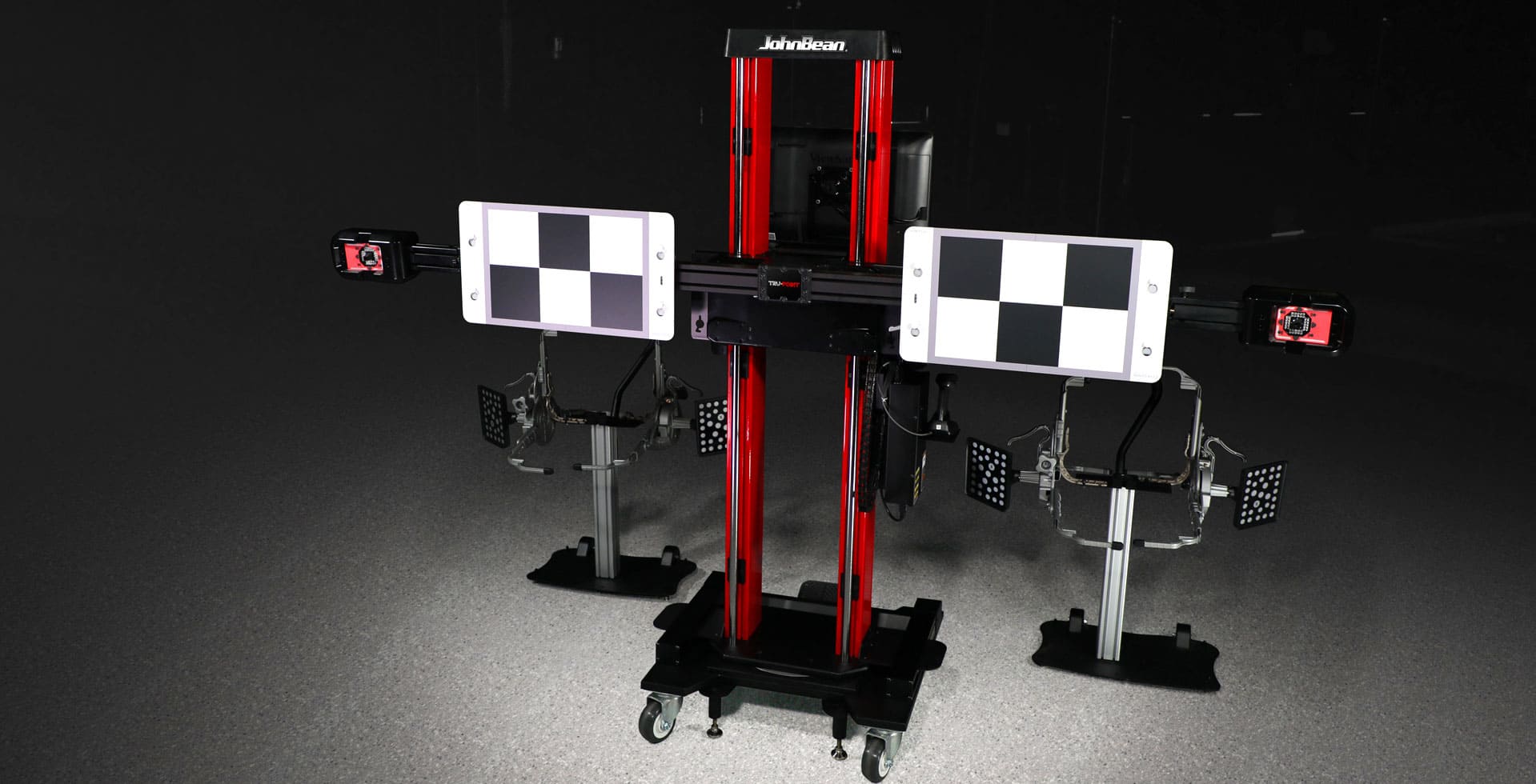 How to Choose the Right ADAS Calibration Targets for Your Business
 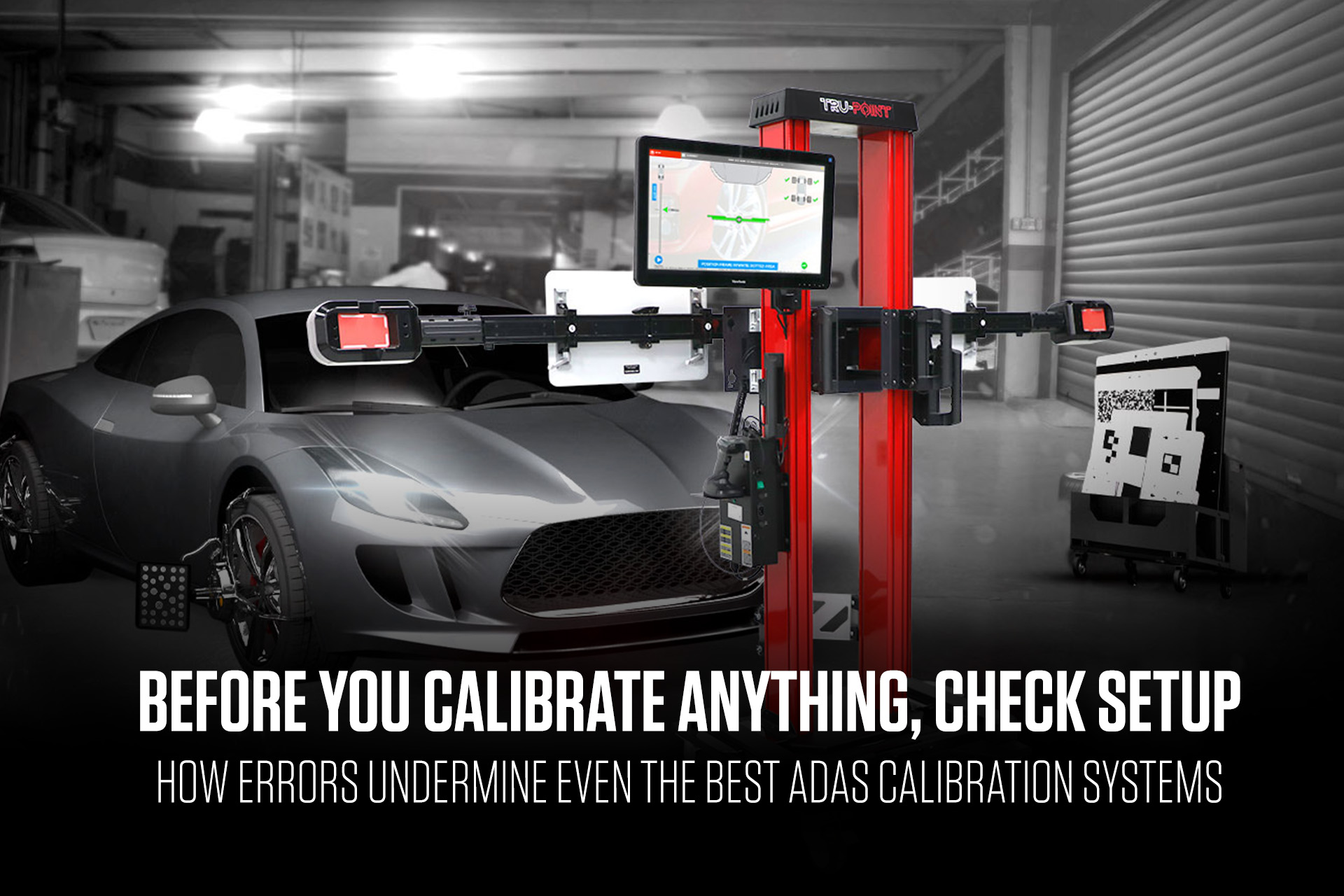 Before You Calibrate Anything, Check Setup. How Errors Undermine Even the Best ADAS Calibration Systems
  Precision Has a Smaller Footprint Than You Think How John Bean Helps Shops Turn Tight Spaces into High-Value Service Bays
 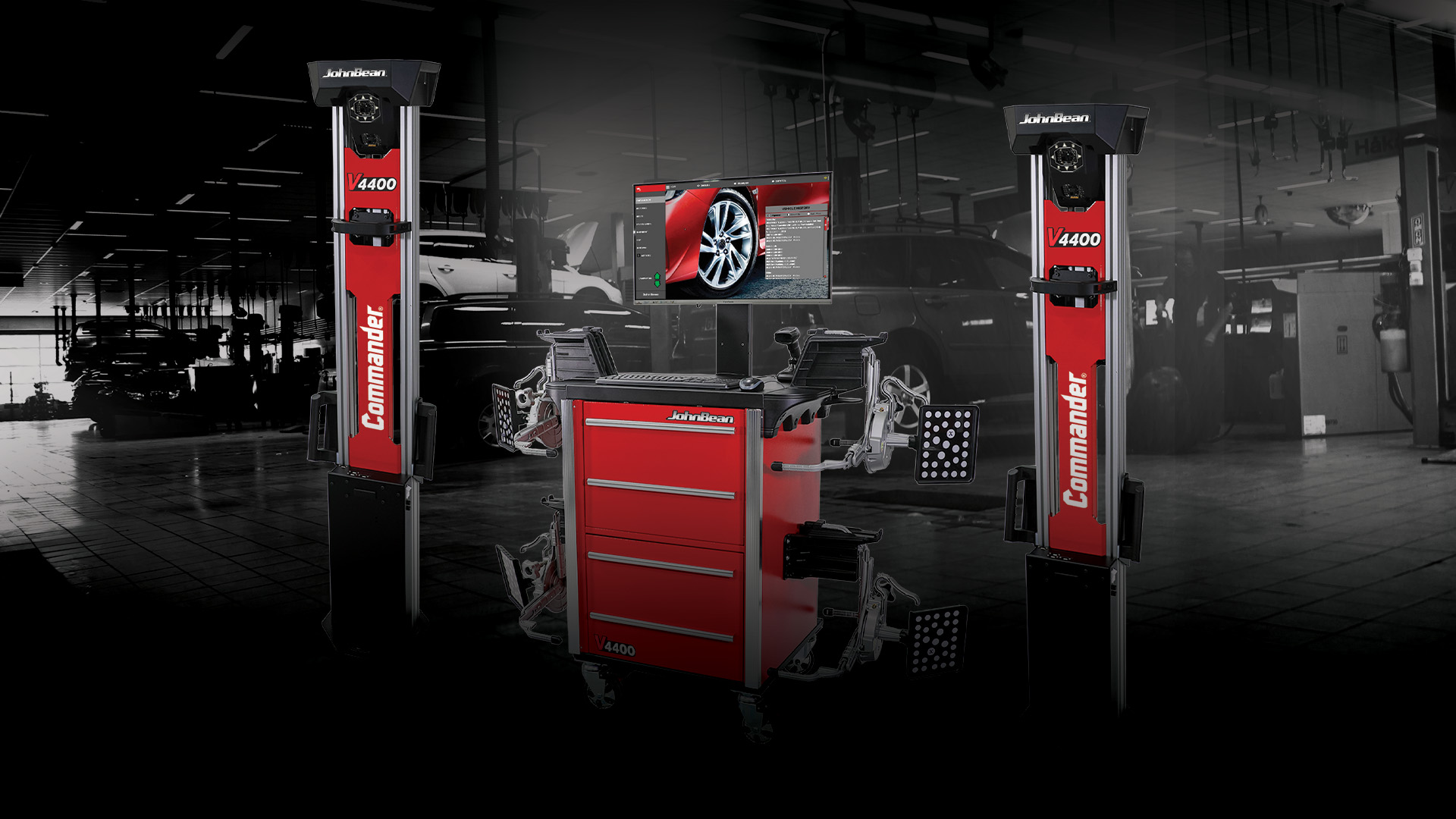 Next Generation Alignment: How the V4400 Commander™ Redefines Shop Efficiency
  How Modern Wheel Alignment Machines Reduce Comebacks and Boost Shop Profitability
  How the Right Tire Changer Increases Shop Efficiency and Customer Throughput
  Why Combo ADAS and Alignment Machines Hurt Shop Productivity